Agriculture depends on water as much as it depends on soil, sunlight, and seed. Delivering that water efficiently—and reliably—is the backbone of modern irrigation systems. Among all the water-delivery tools used across farms worldwide, PVC Lay Flat Water Discharge Pump Hoses have quietly become one of the most essential. They are flexible, lightweight, affordable, strong under pressure, and engineered for the rugged life of fields, pumps, and daily coil-and-uncoil cycles.
This guide brings a complete explanation of what PVC lay flat water discharge hoses are, why farmers prefer them, how to select the correct size and pressure rating, expected pricing, technical specifications, maintenance tips, and expert-level guidance for long-term performance in agricultural irrigation.
Whether you’re sourcing for a farm, a wholesale business, a local dealership, or a global B2B project, this article lays out everything needed to make a confident, well-informed purchase.
1. What Is a PVC Lay Flat Water Discharge Pump Hose?
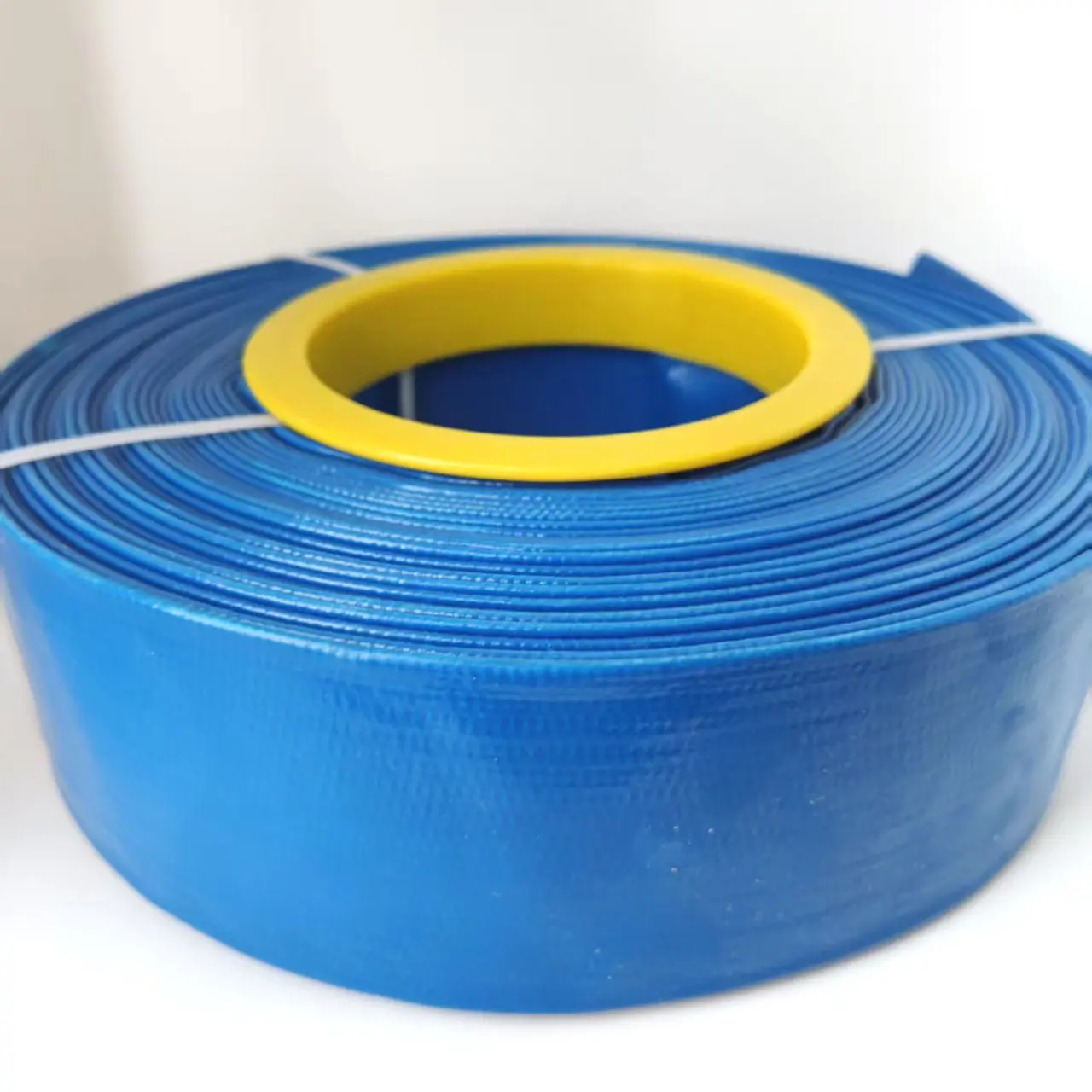
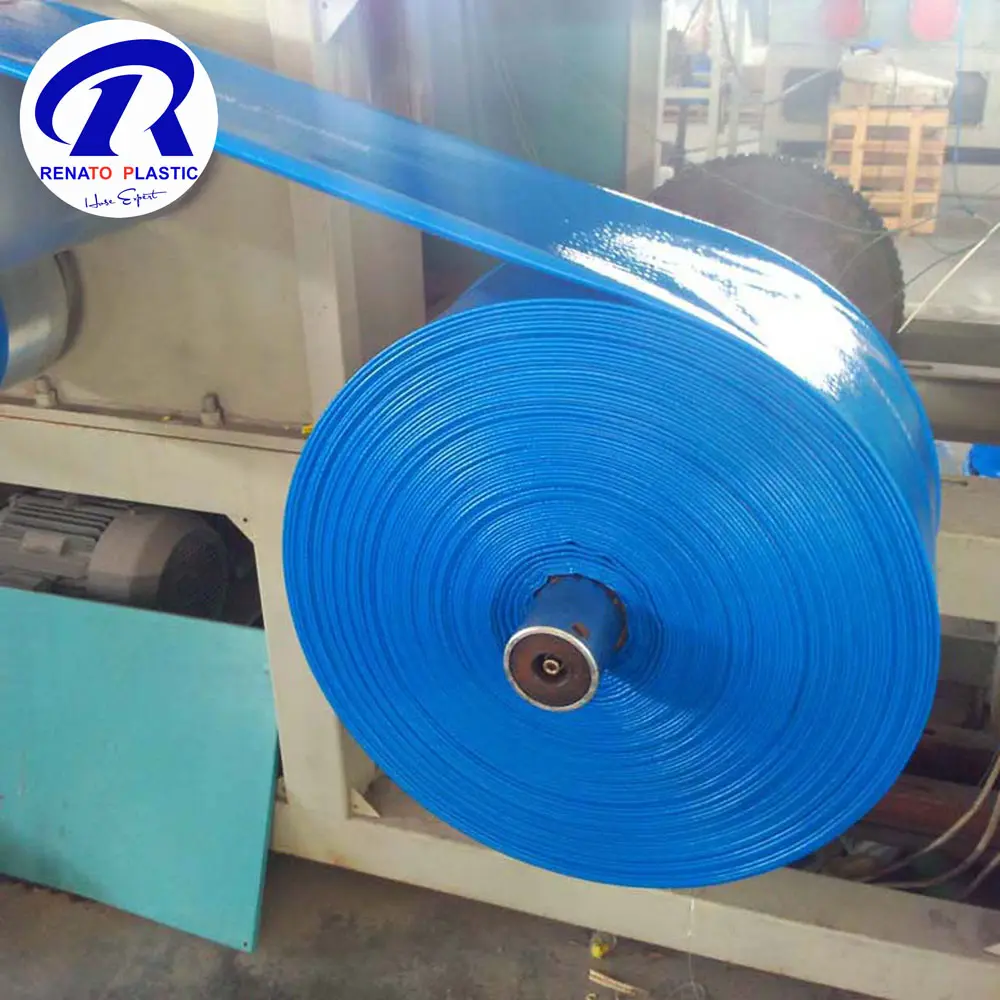
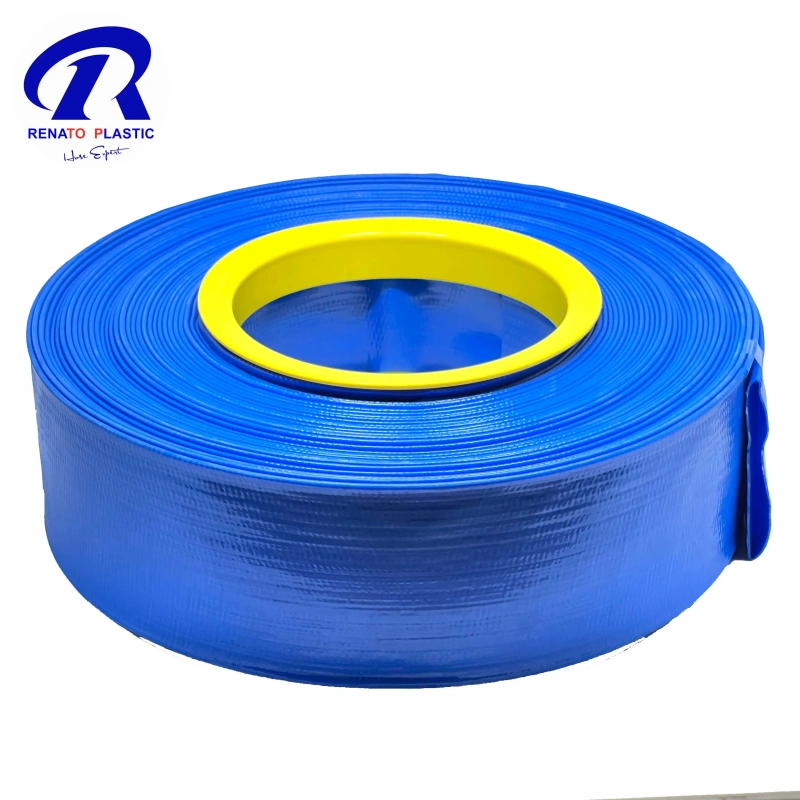
A PVC Lay Flat Water Discharge Pump Hose is a flexible, collapsible hose made of polyvinyl chloride (PVC) reinforced with polyester yarn. When not in use, it collapses into a flat shape—hence the name “lay flat”—making it easy to store and transport. When water pressure flows through it, the hose expands into a round tube.
It is commonly used with:
• Water pumps
• Agricultural irrigation systems
• Flood control & drainage
• Construction dewatering
• Sprinkler and drip systems
• Rural water supply lines
On farms, this hose is famous for one ability above all others: moving large amounts of water quickly and reliably.
2. Why PVC Lay Flat Hose Is Perfect for Agricultural Irrigation
Agriculture is a physically demanding environment. Hoses must endure sun exposure, dragging on gravel, sudden pressure spikes from pumps, and long-term contact with soil and fertilizers. PVC lay flat hose has earned its reputation because it simply performs.
Here’s why farmers appreciate it:
2.1 Lightweight but Strong
Even long hoses—50m, 100m, and 200m rolls—are manageable by one or two people. That’s critical for field work where distance is measured in acres, not meters.
2.2 Resistant to Sun & Weather
High-quality hoses include UV stabilizers that prevent cracking or fading under harsh sunlight.
2.3 High Pressure Endurance
Different pressure ratings (2-10 bar and higher) handle everything from small irrigation pumps to industrial water transfer.
2.4 Easy to Move, Install & Store
When the workday ends, it rolls up flat and takes up very little space.
2.5 Compatible with Many Water Pump Types
Diesel pumps, electric pumps, PTO pumps, and solar-powered pumps all pair well with lay flat hoses.
2.6 Affordable and Long-Lasting
Compared with rubber hose or rigid PVC pipe, the cost-to-performance ratio is extremely attractive.
When a solution blends durability, simplicity, and affordability, farmers tend to adopt it quickly—and PVC lay flat hose has become a global favorite.
3. Key Features of PVC Lay Flat Water Discharge Pump Hose
To choose the right hose, buyers need to understand the technical features that determine its performance.
3.1 PVC Material Quality
High-grade hoses use:
• Virgin PVC (not recycled)
• Anti-aging formula
• UV resistance
• Softening agents to maintain flexibility
• Chemical-resistant additives
Better ingredients mean longer lifespan.
3.2 Reinforcement Yarn
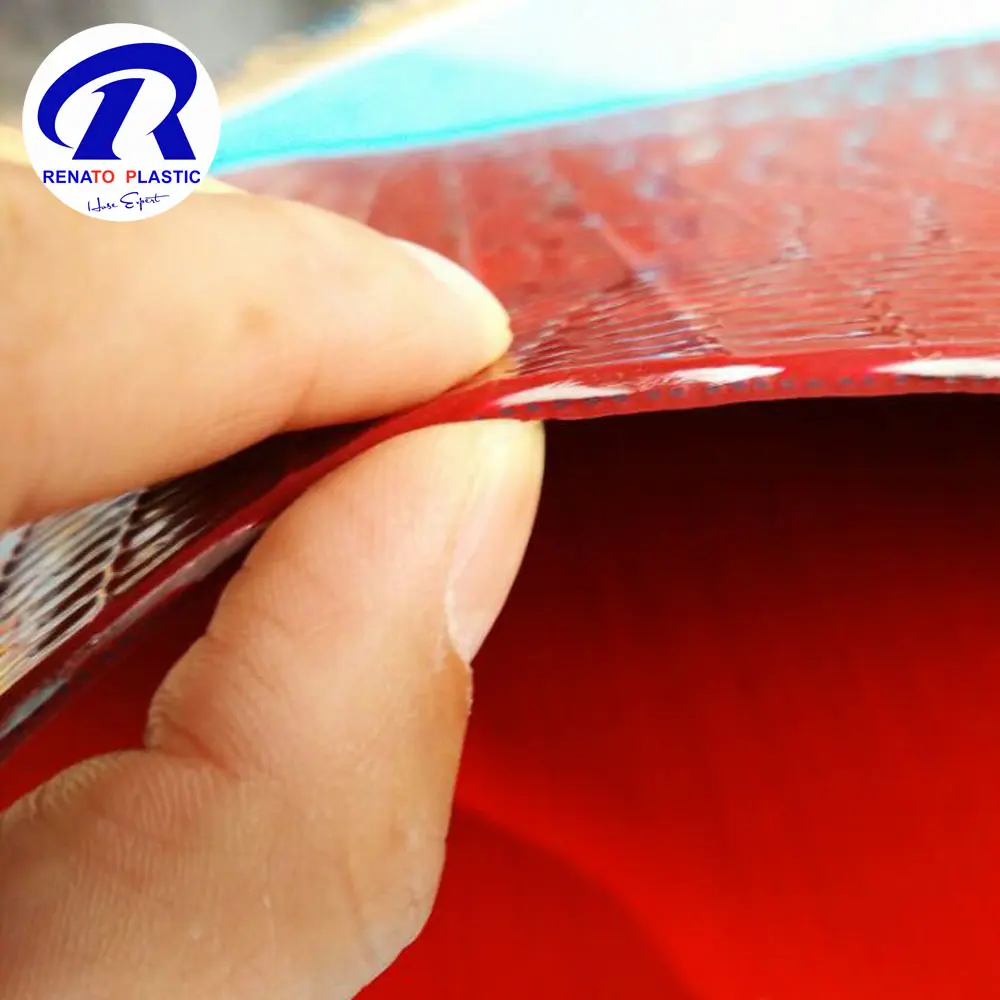
A polyester woven jacket gives tensile strength and prevents the hose from bursting. The density and weave angle influence pressure rating and durability.
3.3 Inner & Outer Wall Thickness
Thicker walls resist abrasion from soil and pump vibration.
Typical hose wall thickness ranges from 1.3 mm to 3.5 mm, depending on pressure rating.
3.4 Burst Pressure & Working Pressure
Agricultural hoses generally offer:
• 2–4 bar for low-pressure irrigation
• 4–6 bar for pump discharge
• 8–10 bar for high-pressure applications
A safe burst pressure is three times the working pressure.
3.5 Temperature Resistance
PVC lay flat hoses usually work within:
−5°C to +65°C
Summer heat and mild frost are fine, though winter freezing must be avoided.
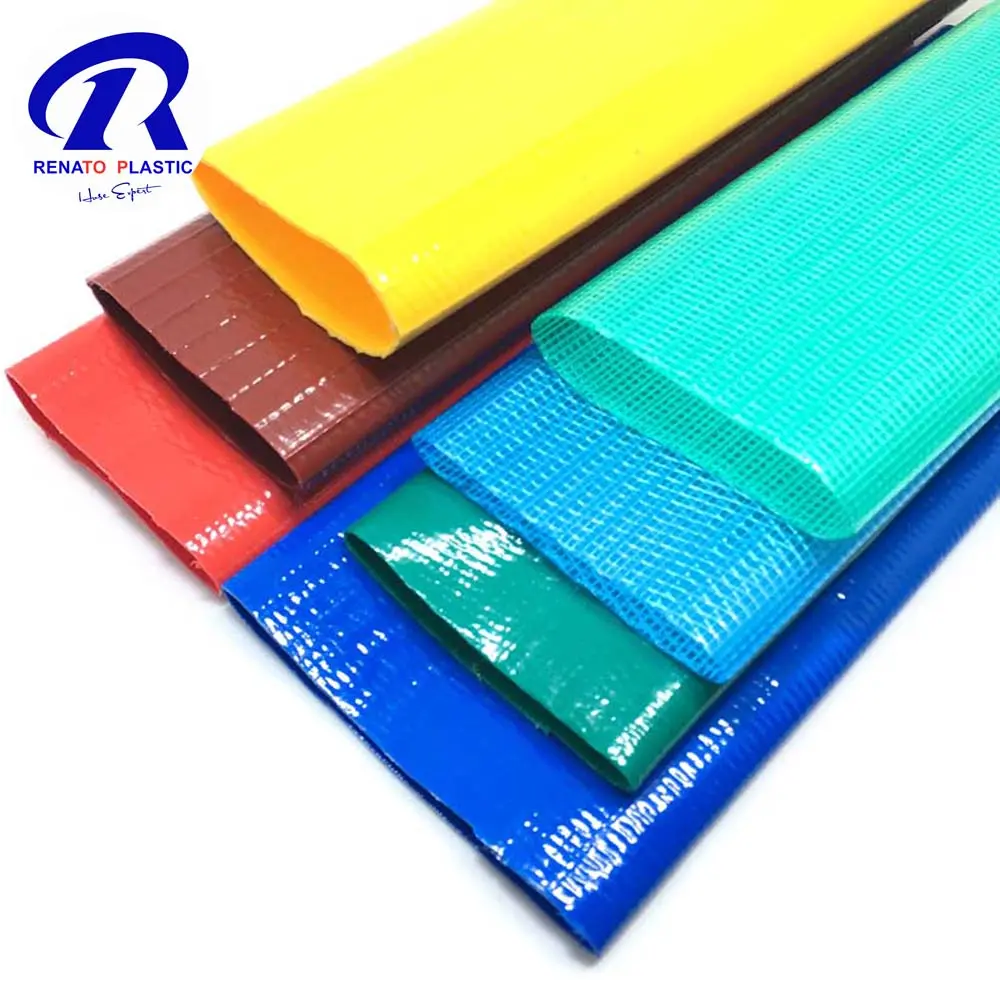
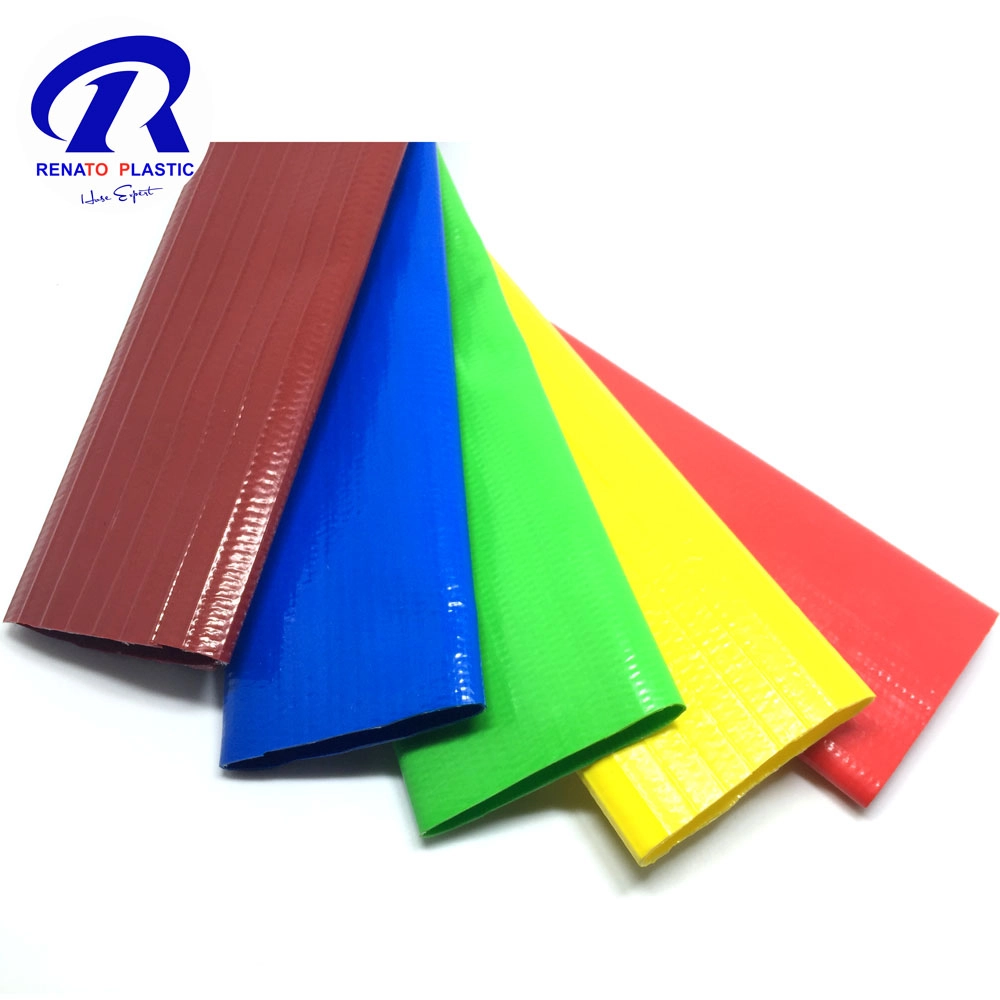
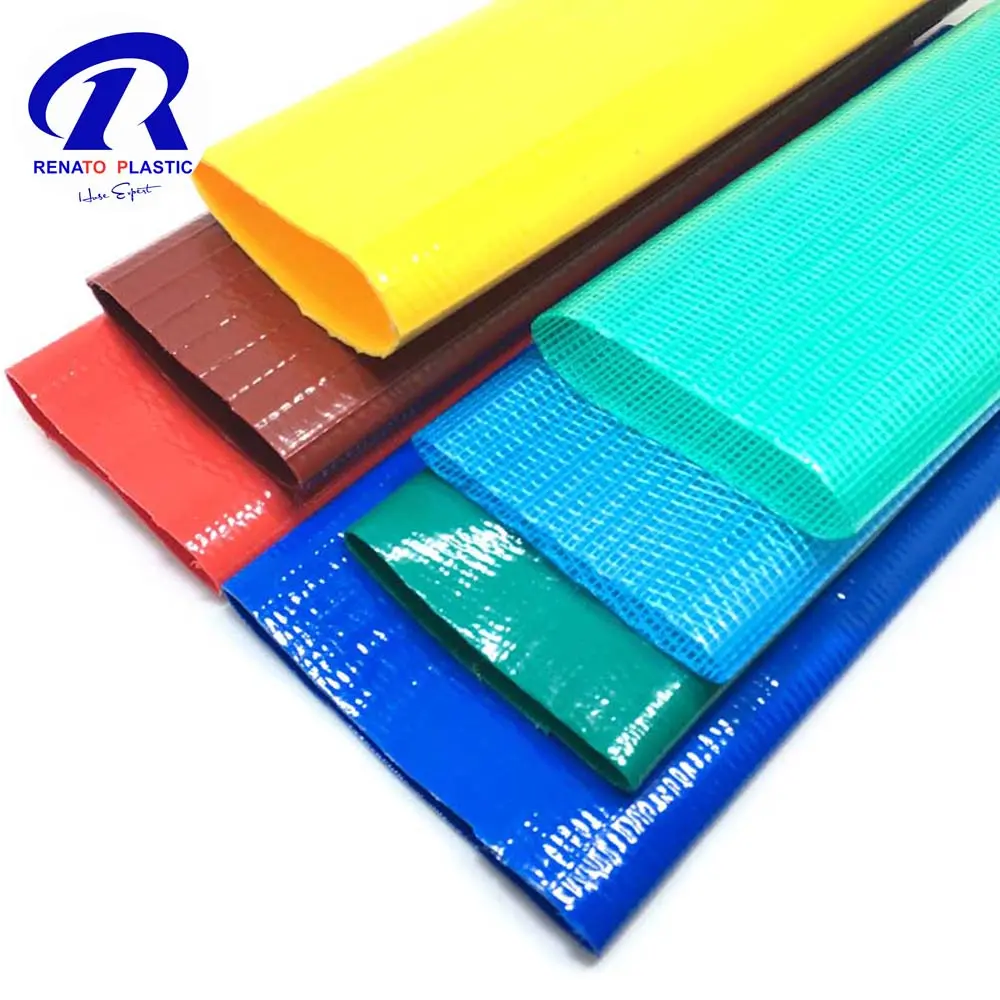
3.6 Hose Color
Color indicates grade:
• Blue – Standard irrigation hose
• Green – Premium reinforced irrigation hose
• Yellow/Orange – Construction-grade high-strength hose
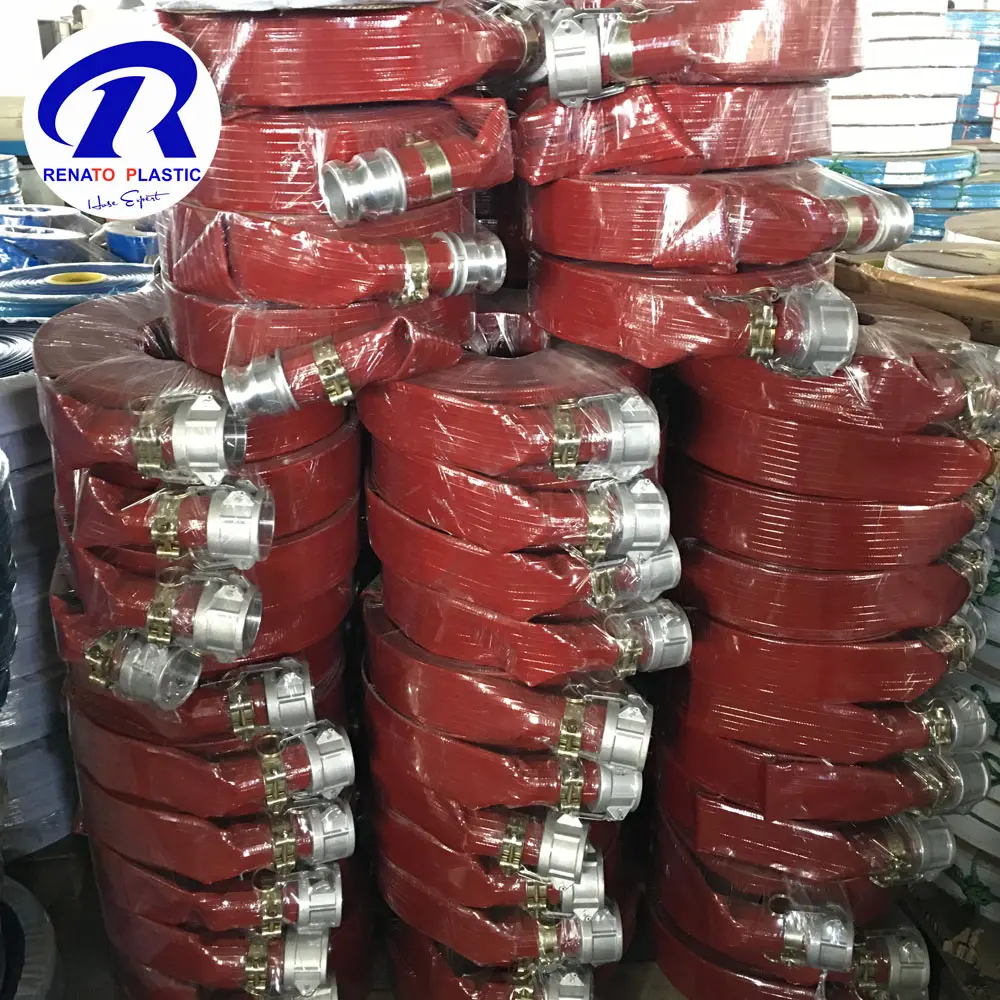
• Red – Heavy duty, high-pressure hose
• Transparent blue – Lightweight economical hose
Color coding helps farmers sort hoses at a glance.
4. Standard Specifications Table (Common Sizes)
Here’s a typical agricultural PVC lay flat hose specification sheet:
| Hose Size (inch) | Inner Diameter (mm) | Working Pressure (bar) | Burst Pressure (bar) | Wall Thickness (mm) | Standard Length (m) |
|---|---|---|---|---|---|
| 1 inch | 25 mm | 3–4 bar | 9–12 bar | 1.3–1.6 mm | 50 / 100 m |
| 1.5 inch | 38 mm | 3–5 bar | 9–15 bar | 1.4–1.7 mm | 50 / 100 m |
| 2 inch | 51 mm | 4–6 bar | 12–18 bar | 1.6–2.0 mm | 50 / 100 m |
| 2.5 inch | 64 mm | 4–6 bar | 12–18 bar | 1.7–2.1 mm | 50 / 100 m |
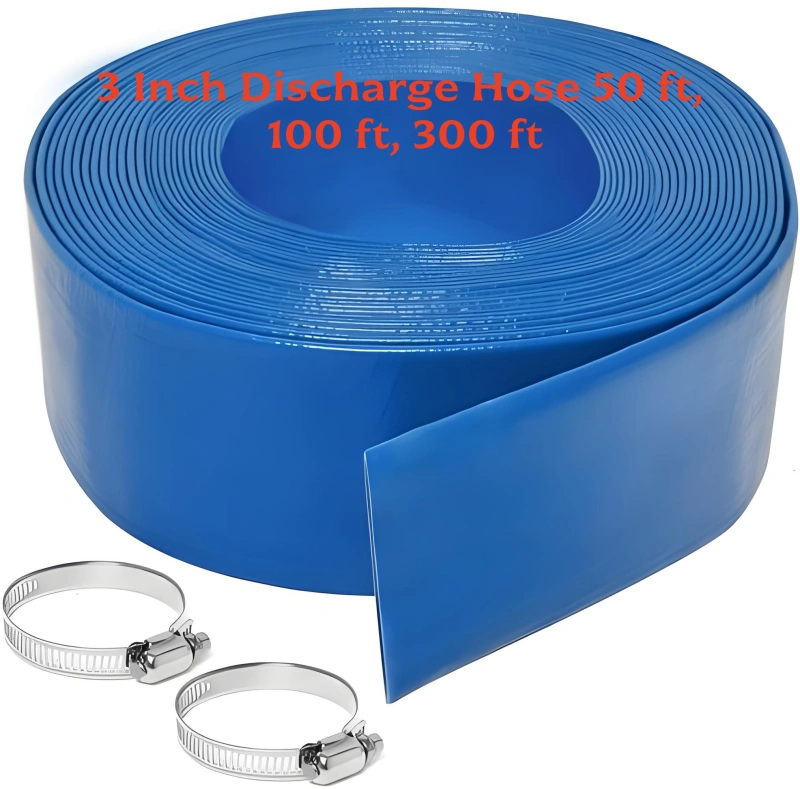
| 3 inch | 76 mm | 4–6 bar | 12–18 bar | 1.8–2.5 mm | 50 / 100 m |
| 4 inch | 102 mm | 4–6 bar | 12–18 bar | 2.0–2.8 mm | 50 / 100 m |
| 6 inch | 152 mm | 4–6 bar | 12–18 bar | 2.5–3.2 mm | 50 m |
| 8 inch | 203 mm | 4–5 bar | 12–15 bar | 2.8–3.5 mm | 30–50 m |
Actual numbers vary by PVC hose factory, but this table provides an accurate framework for buyers.
5. Technical Manufacturing Specifications
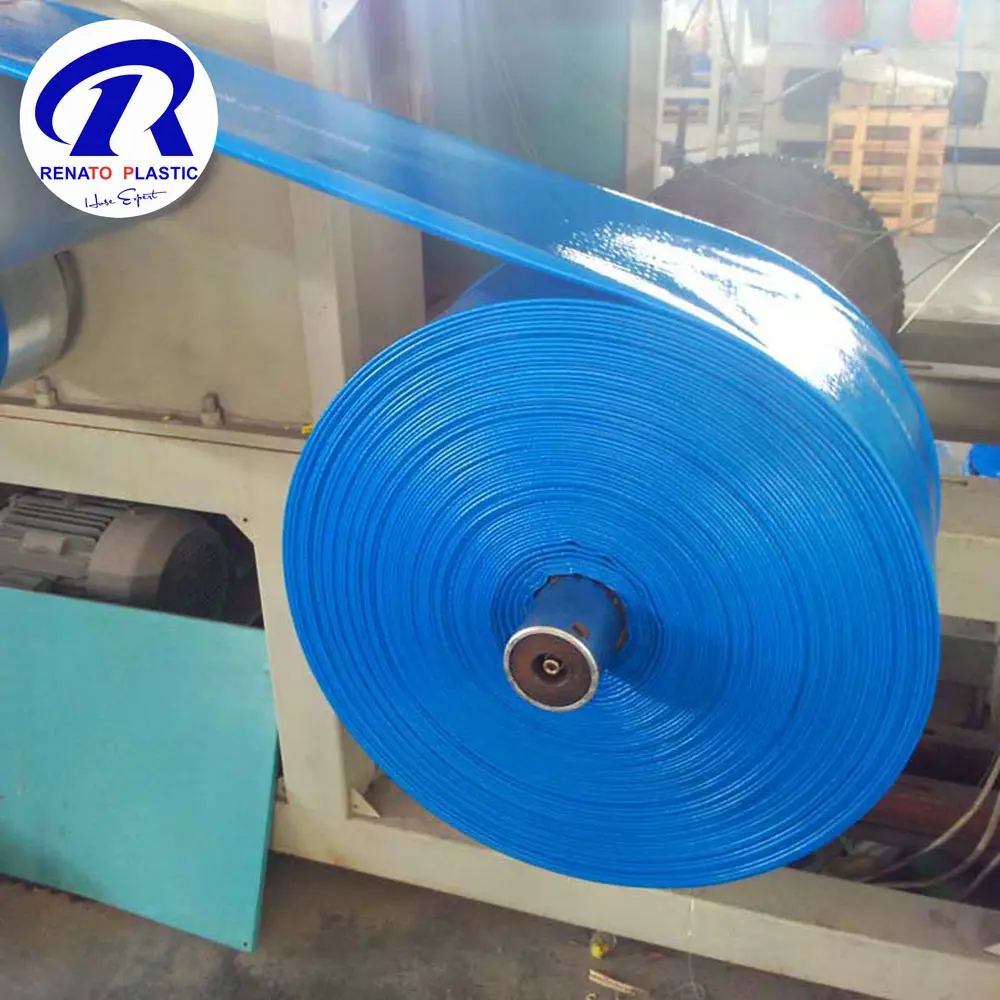
A reliable hose is the product of good engineering. Below is a typical technical spec sheet from a professional factory.
| Item | Technical Specification |
|---|---|
| Material | PVC resin + polyester fiber reinforcement |
| Manufacturing Process | One-time extrusion, high-speed braiding, heat lamination |
| Operating Temperature | −5°C to +65°C |
| Tensile Strength | ≥ 2800 N |
| Adhesion Strength | ≥ 40 N/cm |
| UV Resistance | Anti-UV formula available |
| Color Options | Blue / Green / Yellow / Black / Red |
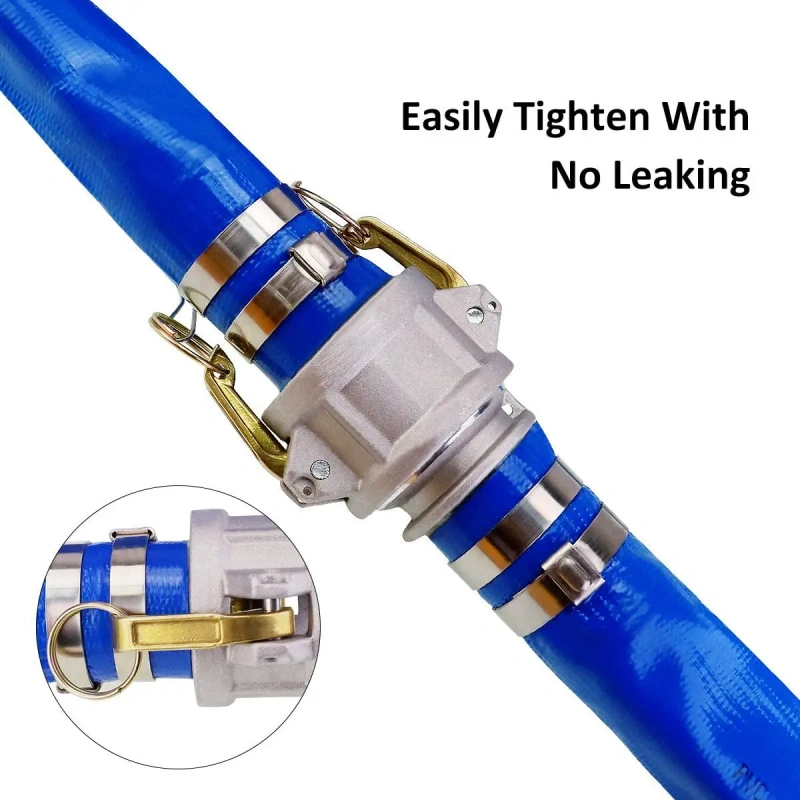
| Nozzle Compatibility | Camlock fittings, aluminum couplings, plastic connectors, steel clamps |
| Certification | RoHS, ISO9001, CE (varies by supplier) |
The craftsmanship behind a lay flat hose is deceptively sophisticated. Beneath the flexible surface lies a precision-woven structure strong enough to hold thousands of liters of water in constant motion.
6. Applications in Agricultural Irrigation
PVC lay flat hoses are “multi-tool” components in irrigation. They connect pumps, distribute water, and support different irrigation styles.
6.1 Pump Discharge
This is the primary purpose. A diesel or electric pump pushes water through the hose to:
• water tanks
• canals
• drip systems
• sprinkler systems
• furrow irrigation
• overhead irrigation systems
6.2 Flood Irrigation
Still widely used in rice fields, vegetable farms, and orchards.
6.3 Drip Irrigation Lines
Mainlines often use 2"–4" lay flat hose, feeding smaller drip lines.
6.4 Traveling Sprinklers and Boom Irrigation
Large farms use lay flat hoses with big reel systems that require flexible water supply lines.
6.5 Water Transfer Between Ponds & Tanks
Pump water from reservoir → farm → fields → drainage areas.
6.6 Fertilizer and Nutrient Delivery
Most PVC hoses resist common fertilizers and diluted chemicals.
Farmers appreciate tools that endure mud, roots, rocks, and long seasons—and PVC lay flat hoses excel in this tough environment.
7. How to Choose the Right Hose for Your Farm
Choosing the wrong hose size can limit pump performance. Here’s the practical approach farmers use.
Step 1: Match Hose Diameter to Pump Outlet
If a pump has a 3" output, use a 3" hose. Undersized hoses choke pump flow.
Step 2: Select the Correct Pressure Rating
Use:
• 2–4 bar for low-pressure drip systems
• 4–6 bar for pump discharge
• 8–10 bar for industrial pumps or long-distance water transfer
Step 3: Consider Length Requirements
Longer hoses increase friction. High-power pumps need higher pressure-rated hoses.
Step 4: Check the Reinforcement Quality
Dense polyester braiding improves lifespan.
Step 5: Confirm Connection Types
Camlock connectors are the most common for farm pumps.
Step 6: Evaluate Sun Exposure
If the hose sits in open sun daily, UV-resistant grades are essential.
As irrigation systems grow more sophisticated, simple mistakes like using the wrong hose diameter can slow down an entire farm’s output.
8. Expected Factory Price Range
The following is PVC Hose Pipe Price List realistic factory-direct pricing (China 2025), depending on size and thickness:
| Hose Size | Standard Grade Price | Heavy Duty Price |
|---|---|---|
| 1 inch | $0.18 – $0.35 per meter | $0.40 – $0.60 per meter |
| 1.5 inch | $0.25 – $0.55 per meter | $0.60 – $0.85 per meter |
| 2 inch | $0.45 – $0.80 per meter | $0.85 – $1.20 per meter |
| 2.5 inch | $0.60 – $1.00 per meter | $1.10 – $1.60 per meter |
| 3 inch | $0.85 – $1.60 per meter | $1.70 – $2.40 per meter |
| 4 inch | $1.20 – $2.20 per meter | $2.40 – $3.50 per meter |
| 6 inch | $2.80 – $4.30 per meter | $4.50 – $6.80 per meter |
Prices vary with:
• material quality
• wall thickness
• pressure rating
• order quantity
• color
• branding and packaging
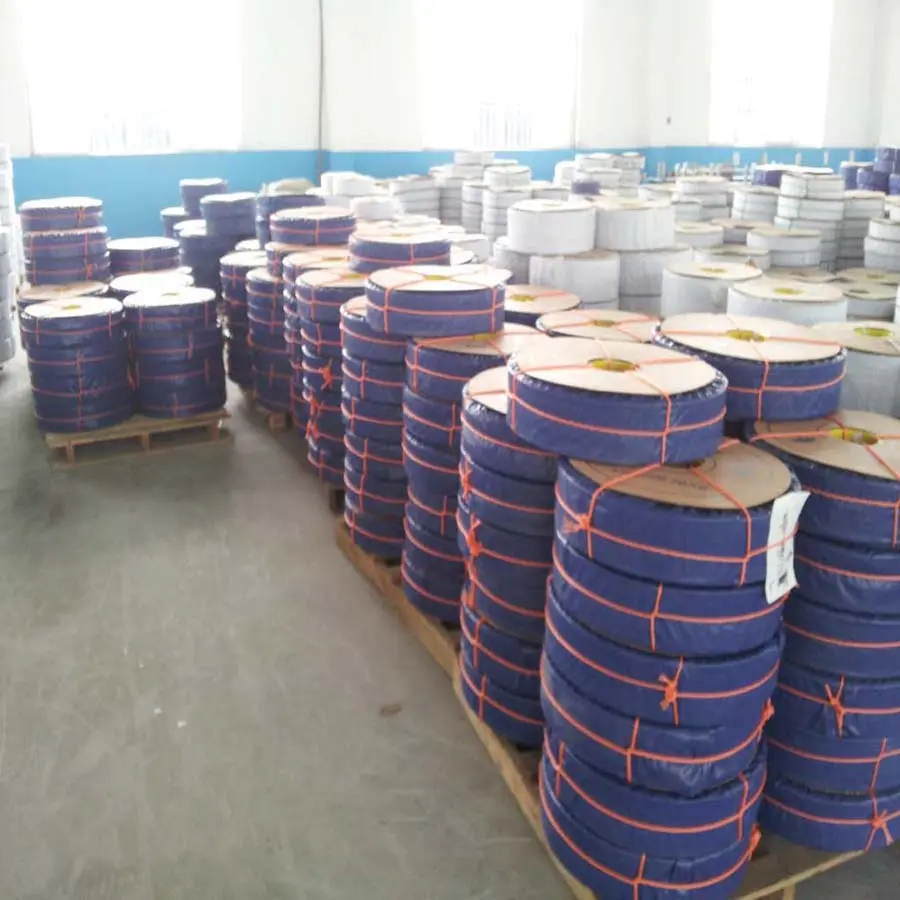
Bulk orders (20GP/40HQ container) usually get maximum discounts.
9. Installation Tips for Real-World Agricultural Use
Farmers usually learn by doing, but a few tips extend hose life significantly.
Avoid sharp stones & metal edges
PVC handles abrasion well, but sharp objects cause damage.
Do not drag the hose when full of water
Move it empty to prevent stretching.
Use proper hose clamps
Loose clamps cause leaks and pressure loss.
Store indoors when not in use
Avoid long-term sun exposure when the season ends.
Unroll fully before starting the pump
A twisted hose reduces flow.
The simplest habits often add years to a hose’s life.
10. Maintenance and Troubleshooting
Common Issues & Solutions
• Small leaks — use PVC hose repair tape or replace section
• Burst hose — usually caused by pressure spikes; upgrade to higher pressure grade
• Uneven water flow — remove bends or kinks before operation
• Soft/flattened hose under pressure — caused by cheap material; invest in thicker-wall hose
Maintenance is minimal, but attention to pump pressure is essential.
11. Environmental Considerations
PVC hoses last many seasons, but like all plastics, they require proper disposal.
Manufacturers increasingly offer:
• recyclable PVC formulas
• RoHS materials
• low-toxicity additives
• long-life designs to reduce waste
Durability is sustainability—fewer replacements mean less environmental impact.
12. Why PVC Lay Flat Hose Outperforms Other Irrigation Options
It beats rigid pipe because it is:
• cheaper
• easier to move
• more flexible
• faster to install
It beats rubber hose because it is:
• lighter
• less expensive
• easier to repair
• more UV-resistant
And it beats basic plastic tubing because it is:
• stronger
• holds higher pressure
• far more durable
PVC lay flat hose succeeds because it strikes the perfect balance between function and cost.
Conclusion: The Definitive Workhorse for Agricultural Irrigation
PVC Lay Flat Water Discharge Pump Hose may look simple, but its role in modern agriculture is enormous. It brings water from pumps to fields, supports drip and sprinkler systems, and keeps farms operating smoothly through all seasons.
Farmers don’t need complicated equipment—they need dependable tools that work every day without fuss. A well-made lay flat hose delivers exactly that: reliability, strength, and efficiency at a cost that makes sense.
As irrigation technology evolves, the humble lay flat hose remains the quiet hero behind successful harvests, proving once again that in agriculture, the best tools are the ones that simply do their job with no drama.
Useful FAQs for Buying PVC Lay Flat Water Discharge Pump Hose
1. What is a PVC lay flat water discharge pump hose used for?
It is mainly used for pumping, transferring, and distributing irrigation water in farms, fields, orchards, vegetable bases, and greenhouse systems.
2. How is a PVC lay flat hose different from a regular garden hose?
A garden hose is round and pressurized for domestic use. A lay flat hose is collapsible, stronger, wider in diameter, and designed for high-flow agricultural pumping.
3. What diameters are available?
Common sizes include 1”, 1.5”, 2”, 2.5”, 3”, 4”, 6”, and 8”. Large farms often use 3–6 inch hoses for high-volume water transfer.
4. What is the working pressure of a lay flat irrigation hose?
Pressure ratings vary from 2 bar to 10 bar, depending on thickness and reinforcement. Heavy-duty hoses can handle higher pressure for long-distance irrigation.
5. Can lay flat hoses be used with centrifugal or submersible pumps?
Yes. They work well with most agricultural water pumps, including diesel pumps, PTO pumps, electric pumps, and high-flow surface pumps.
6. Are PVC lay flat hoses UV-resistant?
Quality agricultural hoses include UV stabilizers to prevent cracking, fading, or loss of flexibility in sunlight.
7. How long do PVC lay flat hoses typically last?
With proper use and storage, hoses last 2–5 years. Heavy-duty reinforced models may last longer, especially when kept away from sharp objects and harsh chemicals.
8. What temperatures can PVC lay flat hoses handle?
Most hoses perform between –10°C and 60°C. Always confirm the exact temperature tolerance in the supplier’s technical sheet.
9. Can I use this hose to transfer fertilizers or chemicals?
Standard hoses are for clean or dirty water. For chemical or fertilizer use, ask for PVC/NBR (rubber-blend) hoses or chemical-resistant models.
10. How do I store a lay flat hose?
Drain water, lay it flat, roll it tightly, and store it in a dry, shaded place. Avoid dragging it over rocks or sharp debris to prevent punctures.
11. Can I order hoses with aluminum or camlock fittings already attached?
Yes. Bulk buyers typically request hoses with mounted camlock, Bauer, or threaded connectors for quick field installation.
12. What is the price range for factory-direct PVC lay flat irrigation hoses?
Prices vary by diameter, pressure rating, and thickness. Light-duty hoses start around $0.20–$0.35 per meter, while heavy-duty high-pressure models can reach $1.50–$3.00 per meter in bulk orders.