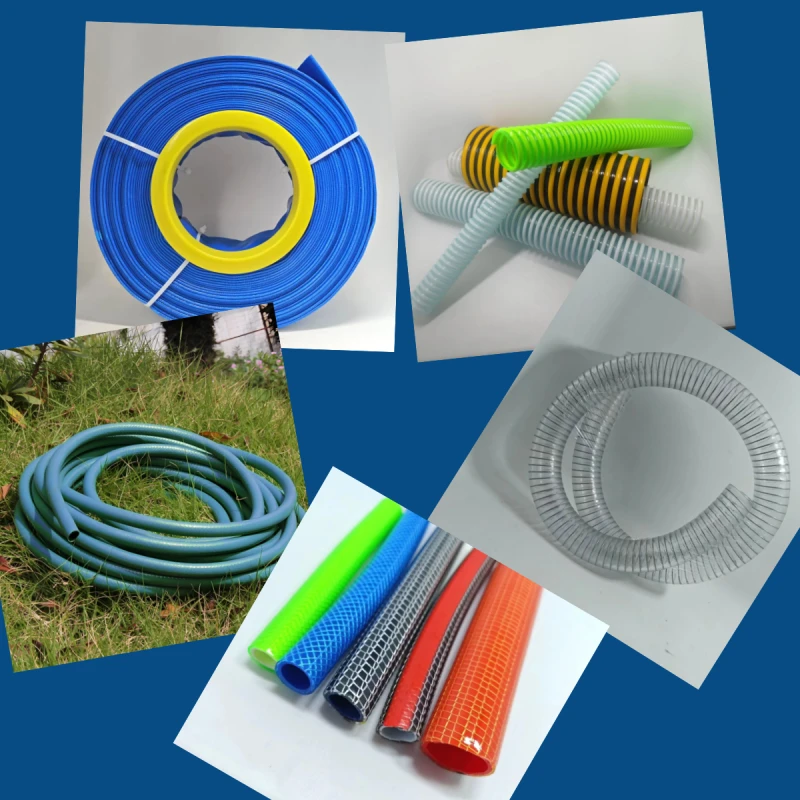
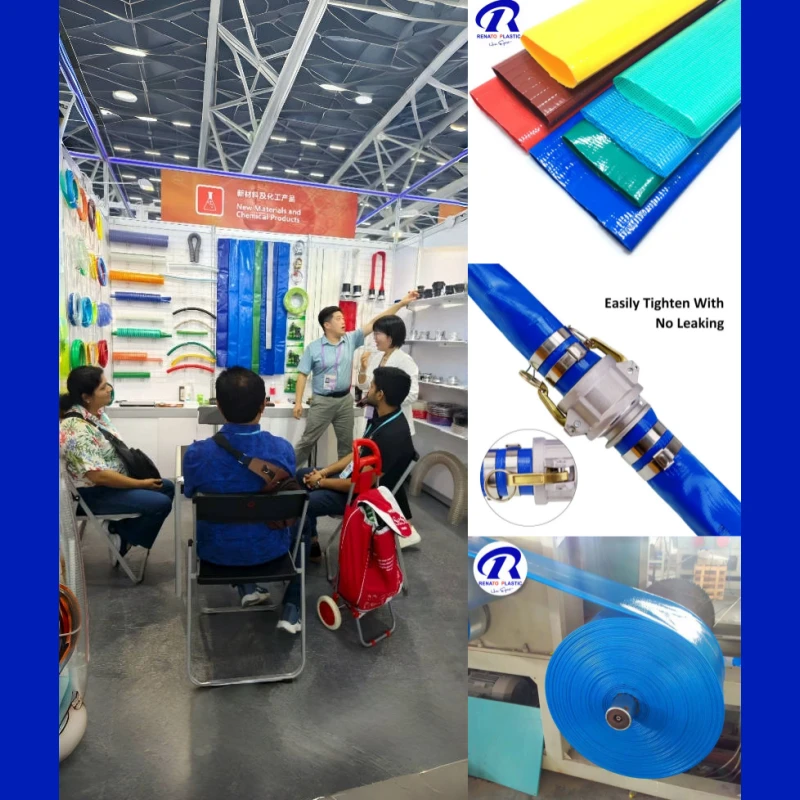
What Is PVC Layflat Hose?
What is PVC layflat hose? Learn its structure, applications, pricing factors, and why sourcing PVC layflat hose directly from China manufacturers like Renato Hose helps buyers reduce costs and ensure stable quality.

PVC layflat hose is one of those industrial products that looks simple at first glance, yet quietly supports agriculture, construction, mining, disaster relief, and water management projects all over the world.
If you’ve ever seen a large hose rolled flat on the ground, quickly deployed for water discharge or irrigation, chances are you were looking at a PVC layflat hose.
This article explains what PVC layflat hose really is, how it works, where it is used, how the business and trading model operates globally, and why sourcing from China—especially from experienced factories like Renato Hose—has become the dominant choice for buyers worldwide.
1. What Is PVC Layflat Hose?
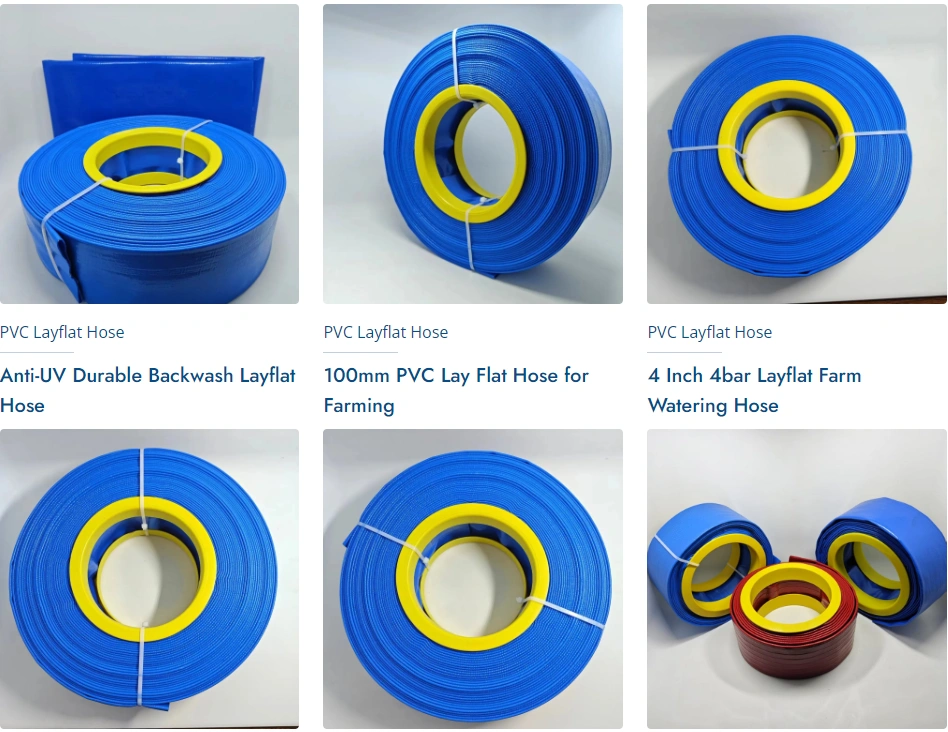
A PVC layflat hose is a flexible, lightweight water discharge hose made from polyvinyl chloride (PVC) that collapses flat when not in use and expands when filled with fluid.
Unlike rigid pipes or spiral hoses, layflat hoses are designed to:
Be easy to transport
Be quick to deploy
Handle medium to high water flow
Withstand repeated rolling and unrolling
When empty, the hose lies completely flat. When pressurized, it forms a round cross-section capable of carrying water, slurry, or other compatible liquids.
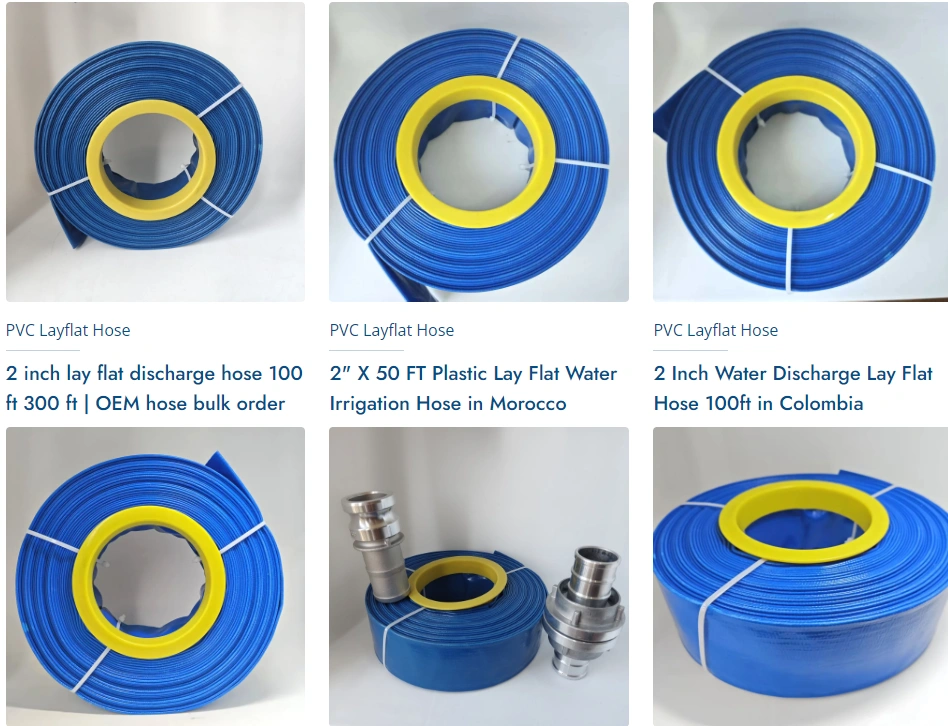
2. Why Is It Called “Layflat”?
The term “layflat” refers to the hose’s ability to:
Lay flat on the ground when empty
Take up minimal storage space
Be rolled or folded without permanent deformation
This design is not cosmetic—it is the core reason why PVC layflat hose is preferred over rigid pipes or heavy rubber hoses in temporary or mobile applications.
3. Basic Structure of PVC Layflat Hose
Although it looks simple, a PVC layflat hose is a layered composite product.
Typical structure includes:
Inner Layer
Smooth PVC lining
Ensures low friction and high flow rate
Resistant to water, mild chemicals, and abrasion
Reinforcement Layer
Polyester or synthetic fiber yarn
Woven or spiral-reinforced
Determines pressure rating and tensile strength
Outer Layer
Tough PVC coating
Protects against UV, abrasion, and weathering
The quality of reinforcement yarn and PVC compound largely determines hose lifespan and performance.
4. Common Specifications and Technical Data
PVC layflat hoses are produced in a wide range of sizes and pressure ratings.
Typical inner diameters:
1 inch
1.5 inch
2 inch
3 inch
4 inch
6 inch
Up to 12 inch or larger for industrial use
Standard lengths:
30 m
50 m
100 m
Custom lengths for OEM orders
Pressure ratings:
Working pressure: 2–10 bar (30–150 psi)
Burst pressure: 2.5–3 times working pressure
Temperature range:
Usually −5°C to +60°C (23°F to 140°F)
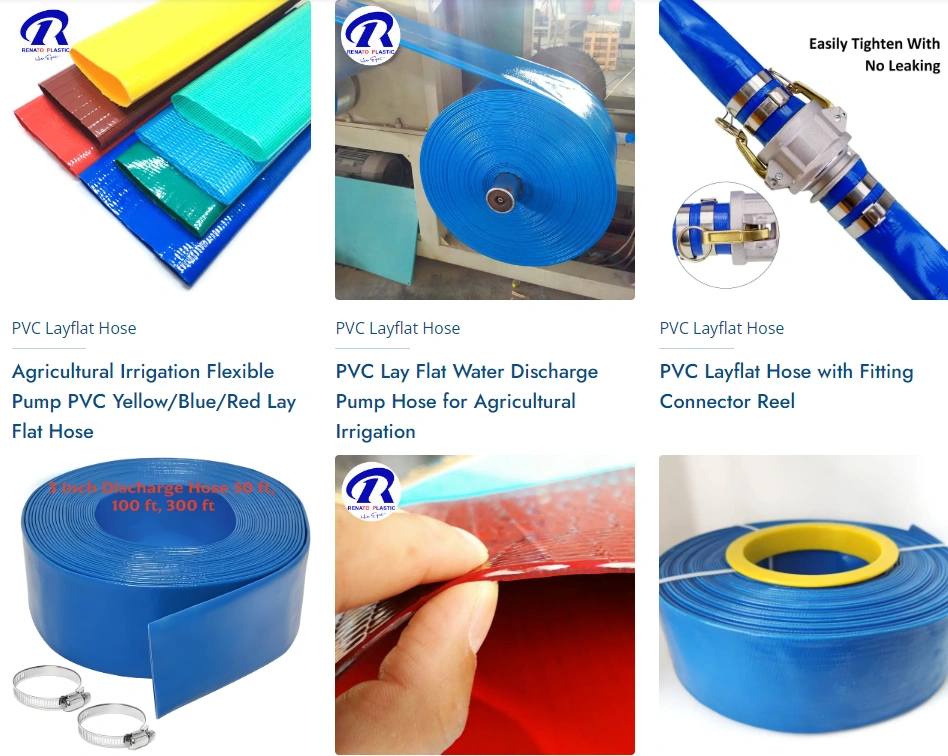
5. Key Applications of PVC Layflat Hose
5.1 Agriculture and Irrigation
This is the largest application segment globally.
PVC layflat hoses are widely used for:
Flood irrigation
Drip irrigation supply lines
Water transfer from pumps to fields
Farmers prefer them because they are:
Lightweight
Easy to move between fields
Cost-effective compared to rubber hoses
5.2 Construction and Mining
On construction sites, layflat hoses are used for:
Dewatering
Groundwater drainage
Slurry and muddy water discharge
In mining, they are often used as temporary water lines, especially where rigid piping is impractical.
5.3 Industrial Water Transfer
Factories use PVC layflat hoses for:
Cooling water circulation
Temporary water bypass systems
Emergency water supply
Their ability to be quickly deployed is a major advantage in industrial environments.
5.4 Flood Control and Emergency Response
During floods or disasters, time matters.
PVC layflat hoses are used by:
Municipal authorities
Fire departments
Emergency response teams
They can be transported in bulk and deployed rapidly with portable pumps.
6. Advantages of PVC Layflat Hose
PVC layflat hose dominates the market for good reasons.
Key advantages include:
Lightweight compared to rubber hose
Easy storage and transport
Good flexibility
Competitive cost
Wide size availability
Suitable for temporary and mobile applications
From a cost-performance perspective, PVC layflat hose is hard to beat.
7. Limitations and Realistic Expectations
No product is perfect.
PVC layflat hoses are not ideal for:
Very high temperatures
Highly abrasive solids
Permanent underground installation
High-pressure hydraulic systems
Understanding these limits helps buyers avoid misuse and premature failure.
8. Global PVC Layflat Hose Market Overview
The global PVC layflat hose market is driven by:
Agricultural expansion
Infrastructure development
Climate-related water management needs
Key consuming regions:
Asia
Africa
Middle East
South America
Parts of North America and Europe
China plays a central role in global supply, both as a manufacturer and exporter.
9. PVC Layflat Hose Business Model Explained
Understanding the business model is crucial for buyers, distributors, and importers.
9.1 Manufacturer → Distributor → End User
This is the traditional model:
Factories produce in bulk
Distributors import and stock
End users buy locally
This model offers convenience but adds multiple layers of markup.
9.2 Manufacturer → Importer / Wholesaler → Market
Many buyers now source directly from factories:
Lower unit cost
Custom specifications
Private labeling (OEM)
This model requires more coordination but significantly improves margins.
9.3 OEM and Private Label Model
PVC layflat hose is ideal for OEM business because:
Branding is simple (printing or packaging)
Specifications are customizable
Large repeat orders are common
This is where experienced Chinese factories excel.

10. Why China Dominates PVC Layflat Hose Manufacturing
China’s dominance is not accidental.
Key reasons include:
Mature PVC compounding industry
Large-scale yarn reinforcement production
Automated extrusion and weaving lines
Skilled labor with cost efficiency
Strong export logistics infrastructure
As a result, Chinese factories offer consistent quality at competitive prices.
11. Why Source from Renato Hose Factory in China?
Among Chinese PVC hose manufacturers, Renato Hose represents a typical export-oriented, quality-focused factory.
11.1 Manufacturing Capability
Renato Hose typically offers:
Multiple extrusion lines
Consistent quality control
Stable raw material sourcing
High-volume production capacity
This ensures reliable delivery for bulk orders.
11.2 Customization and OEM Support
Renato Hose supports:
Custom diameters and lengths
Pressure rating adjustments
Brand printing
Customized packaging
For distributors, this flexibility is a major advantage.
11.3 Cost Advantage
Direct factory sourcing reduces:
Distributor markup
Unnecessary intermediaries
Long-term procurement costs
This is especially important for price-sensitive markets such as agriculture.
11.4 Export Experience
An experienced export factory understands:
International quality expectations
Packaging for long-distance shipping
Documentation and compliance
This reduces risk for overseas buyers.
12. Quality Control: What Buyers Should Check
When sourcing PVC layflat hose, buyers should focus on:
Wall thickness consistency
Yarn reinforcement density
Working and burst pressure test reports
UV resistance
PVC compound formulation
A good factory will provide test data and samples.
13. Pricing Structure of PVC Layflat Hose
Prices depend on:
Diameter
Pressure rating
Wall thickness
Order quantity
Raw material cost fluctuations
Factory-direct pricing is usually 20–40% lower than distributor pricing in many markets.
Factory Price Range (China Export, FOB / EXW)
Typical price range for PVC layflat hose directly from China factories (such as Renato Hose) when purchased in bulk (full container or pallet quantities) with standard specifications.
| Hose Diameter | Typical Factory Price Range (USD per Meter) |
|---|---|
| 1 inch | $0.30 – $0.50 |
| 1.5 inch | $0.35 – $0.60 |
| 2 inch | $0.40 – $0.80 |
| 3 inch | $0.60 – $1.10 |
| 4 inch | $0.80 – $1.50 |
| 6 inch | $1.20 – $2.20 |
| 8 inch | $1.80 – $3.00 |
| 10 inch | $2.50 – $4.00 |
| 12 inch | $3.50 – $5.50 |
Market Price Range (Local Supply / Distributor / Importer)
After freight, customs, handling, and dealer markup, PVC layflat hose typically sells at a higher price in local markets.
| Hose Diameter | Typical Market Price Range (USD per Meter) |
|---|---|
| 1 inch | $0.60 – $1.00 |
| 1.5 inch | $0.80 – $1.20 |
| 2 inch | $0.90 – $1.50 |
| 3 inch | $1.20 – $2.00 |
| 4 inch | $1.80 – $3.00 |
| 6 inch | $2.50 – $3.80 |
| 8 inch | $3.20 – $4.70 |
| 10 inch | $4.00 – $6.00 |
| 12 inch | $5.50 – $8.00 |
14. Logistics and Shipping Considerations
PVC layflat hose is typically shipped:
Rolled or folded
Packed in woven bags or cartons
Loaded efficiently in containers due to flat design
This reduces freight cost compared to rigid piping.
15. Sustainability and Environmental Considerations
Modern PVC layflat hoses:
Use recyclable PVC
Have long service life
Reduce material waste compared to rigid systems
While PVC is not biodegradable, efficient design reduces overall environmental impact.
16. Common Mistakes Buyers Make
Choosing lowest price without checking pressure rating
Ignoring reinforcement quality
Ordering incorrect diameter for pump capacity
Underestimating abrasion conditions
A small upfront saving can lead to large replacement costs later.
17. How to Choose the Right PVC Layflat Hose
Buyers should evaluate:
Application scenario
Required flow rate
Working pressure
Deployment frequency
Expected lifespan
Matching the hose to the job matters more than brand name.
18. Final Thoughts: Why PVC Layflat Hose Remains Essential
PVC layflat hose is not a “low-tech” product—it is a practical engineering solution optimized for real-world conditions.
Its global popularity is driven by:
Flexibility
Cost efficiency
Ease of use
Scalability
For buyers looking to build a sustainable supply chain, sourcing directly from experienced Chinese manufacturers like Renato Hose offers a balance of quality, customization, and cost control that few alternatives can match.
In water management, simplicity that works reliably is often the smartest technology of all.