Flexible PVC hose is one of those products that quietly holds modern industry together. You’ll find it everywhere—agriculture, construction, manufacturing, mining, food processing, home gardens, and even medical equipment. It’s lightweight, adaptable, affordable, and surprisingly versatile.
Yet many buyers only know it by appearance, not by performance. They choose based on price alone and later discover issues with pressure, kinking, chemical resistance, or lifespan.
This article explains what flexible PVC hose really is, how it’s made, what types exist, where it performs best (and where it doesn’t), and how to choose the right one for your application. Practical knowledge first. Buzzwords last.
What Is Flexible PVC Hose?
A flexible PVC hose is a hose made primarily from polyvinyl chloride (PVC) combined with plasticizers and additives that give it flexibility, durability, and resistance to environmental factors.
Unlike rigid PVC pipes, flexible PVC hoses can bend, coil, stretch slightly, and absorb vibration—making them ideal for fluid transfer where movement, portability, or irregular routing is required.
At its core, a flexible PVC hose is designed to:
Transport liquids, air, or light solids
Withstand internal pressure or vacuum
Remain flexible across a working temperature range
Why PVC? The Material Science in Simple Terms
PVC is popular because it sits at a rare intersection of properties:
Naturally corrosion resistant
Chemically stable
Easy to process
Cost-effective at scale
On its own, PVC is rigid. To make it flexible, manufacturers add plasticizers, which loosen the polymer chains and allow the material to bend without cracking.
Additives may also include:
UV stabilizers
Anti-aging agents
Reinforcement fibers
Flame retardants
Food-grade or medical-grade compounds
The exact formula determines performance.
How Flexible PVC Hose Is Manufactured
Understanding the manufacturing process helps explain why hoses differ so much in quality.
Step 1: Raw Material Compounding
PVC resin is blended with plasticizers, stabilizers, and functional additives. Quality hoses use virgin PVC; lower-grade products may include recycled material.
Step 2: Extrusion
The compound is heated and pushed through a die to form the hose shape. For reinforced hoses, this step is combined with reinforcement insertion.
Step 3: Reinforcement (Optional)
Depending on the design, manufacturers may add:
Polyester yarn braiding
Steel wire spirals
PVC rigid helix
Reinforcement dramatically affects pressure rating and vacuum resistance.
Step 4: Cooling and Sizing
The hose is cooled, calibrated for diameter accuracy, and cut to length.
Step 5: Quality Testing
Reputable manufacturers test:
Working pressure
Burst pressure
Flexibility at low temperatures
Aging and UV resistance
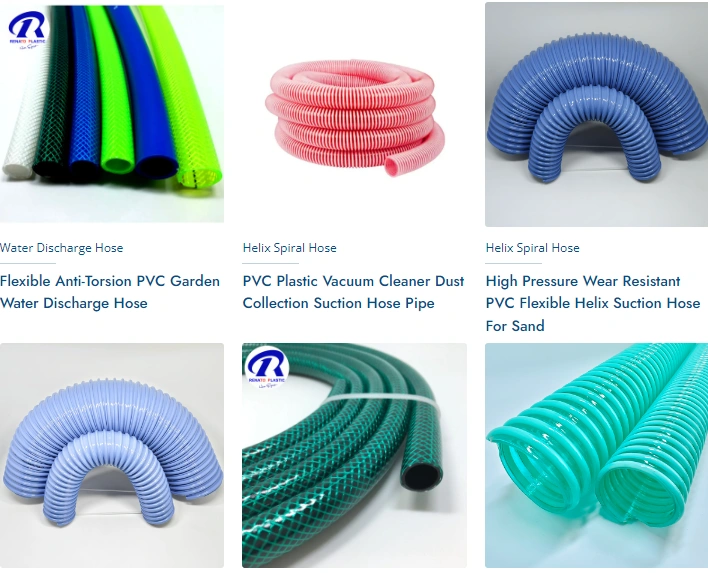
Main Types of Flexible PVC Hose
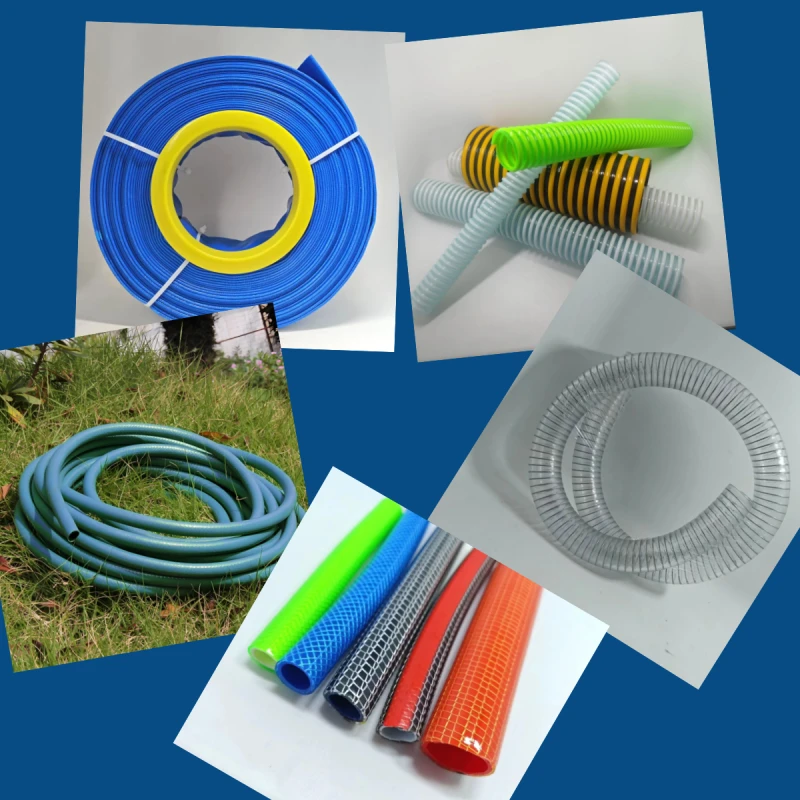
Flexible PVC hose is not a single product. It’s a family of designs optimized for different jobs.
Clear PVC Hose
Transparent, lightweight, and flexible.
Best for:
Water transfer
Chemical observation
Laboratory use
Low-pressure applications
Advantages:
Visual flow monitoring
Easy leak detection
Limitations:
Lower pressure rating
UV sensitivity without additives
PVC Fiber Reinforced Hose
Reinforced with polyester yarn between PVC layers.
Best for:
Water supply
Air compressors
Irrigation
Light industrial use
Advantages:
Higher pressure resistance
Maintains flexibility
This is one of the most widely used PVC hose types globally.
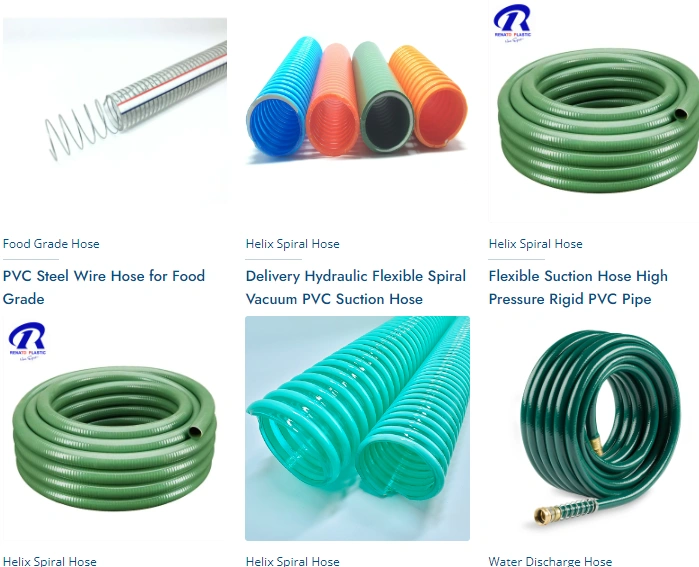
PVC Steel Wire Reinforced Hose
Contains a steel wire helix embedded in the wall.
Best for:
Suction and discharge
Vacuum applications
Slurry transfer
Advantages:
Anti-collapse under vacuum
Strong structural integrity
PVC Lay Flat Hose
Designed to flatten when empty.
Best for:
Water discharge
Irrigation
Flood control
Construction sites
Advantages:
Easy storage
Lightweight
Large diameter options
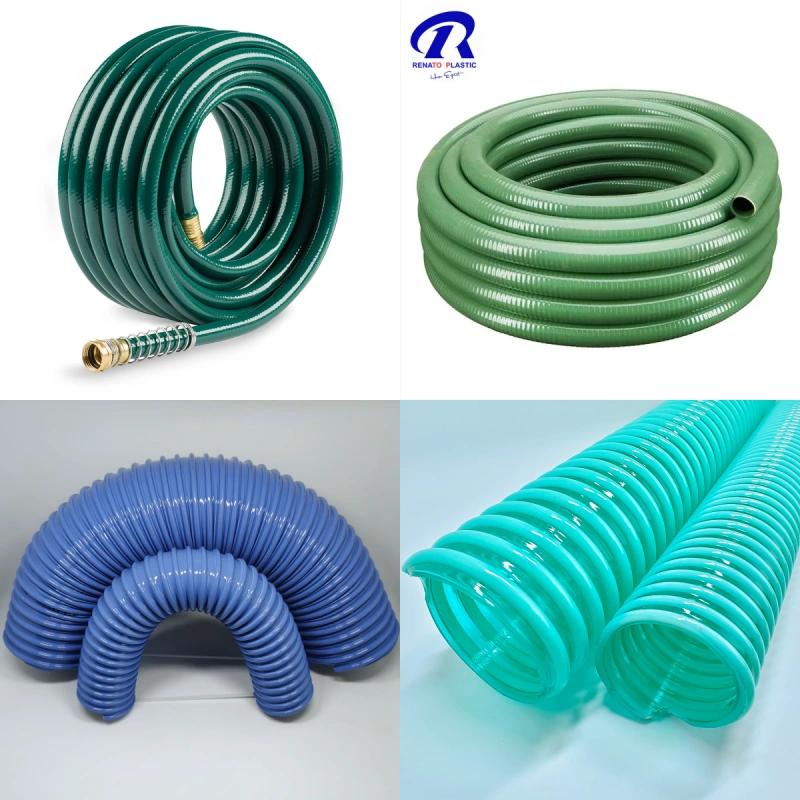
PVC Spiral Suction Hose
Rigid PVC helix with flexible wall.
Best for:
Sand
Mud
Agricultural suction
Industrial waste
Advantages:
Abrasion resistance
Shape retention
Factory price
Factors influencing price include:
Whether virgin PVC raw materials are used
Plasticizer and stabilizer grades
Wall thickness and reinforcing layer structure
Order quantity (MOQ)
Whether food-grade/industrial-grade certification is required. The following are common reference prices for exports from Chinese factories, excluding freight, customs duties, and special certification fees. Actual prices are significantly affected by raw materials, specifications, and quantity.
| Hose Type | Inner Diameter | Length | Working Pressure | Reference Price (USD) |
|---|---|---|---|---|
| Clear PVC Hose | 6–25 mm | 30–100 m | 4–8 bar | $0.20 – $0.80 / m |
| PVC Fiber Reinforced Hose | 8–50 mm | 30–100 m | 8–20 bar | $0.50 – $1.80 / m |
| PVC Steel Wire Reinforced Hose | 19–100 mm | 30–50 m | 6–15 bar | $1.50 – $6.50 / m |
| PVC Lay Flat Hose | 1″–8″ | 50–100 m | 4–10 bar | $0.40 – $2.20 / m |
| PVC Spiral Suction Hose | 25–150 mm | 30 m | Vacuum / Low pressure | $1.80 – $7.50 / m |
Key Performance Characteristics Explained
Flexibility
Flexibility depends on plasticizer content and wall thickness. More flexibility usually means lower pressure resistance.
Pressure Rating
Working pressure: safe continuous use
Burst pressure: failure point (usually 3–4× working pressure)
Never size a hose close to burst pressure.
Temperature Range
Typical flexible PVC hose range:
-10°C to +60°C (14°F to 140°F)
Cold temperatures reduce flexibility. High temperatures accelerate aging.
Chemical Resistance
PVC resists:
Water
Many acids and alkalis
Alcohols
PVC does not perform well with:
Aromatic solvents
Strong oils (unless specially formulated)
Always check chemical compatibility charts.
Advantages of Flexible PVC Hose
Flexible PVC hose remains dominant for good reasons:
Lightweight and easy to handle
Excellent corrosion resistance
Lower cost than rubber hoses
Wide range of sizes and types
Customizable for specific markets
From an economic standpoint, PVC offers one of the best performance-to-cost ratios available.
Limitations You Should Understand
No material is perfect.
Flexible PVC hose limitations include:
Reduced flexibility in cold weather
Shorter lifespan under UV without protection
Lower heat resistance than rubber
Plasticizer migration over long periods
Understanding these limits prevents misuse.
Common Applications by Industry
Agriculture
Irrigation lines
Fertilizer transfer
Water pumps
PVC is favored due to low cost and easy replacement.
Construction
Dewatering
Concrete washout
Dust suppression
Lay flat and suction hoses dominate here.
Industrial Manufacturing
Air lines
Coolant transfer
Chemical handling (light-duty)
Fiber reinforced hoses are common.
Food and Beverage
Water transport
Liquid food transfer (food-grade PVC only)
Material certification is critical.
Home and Garden
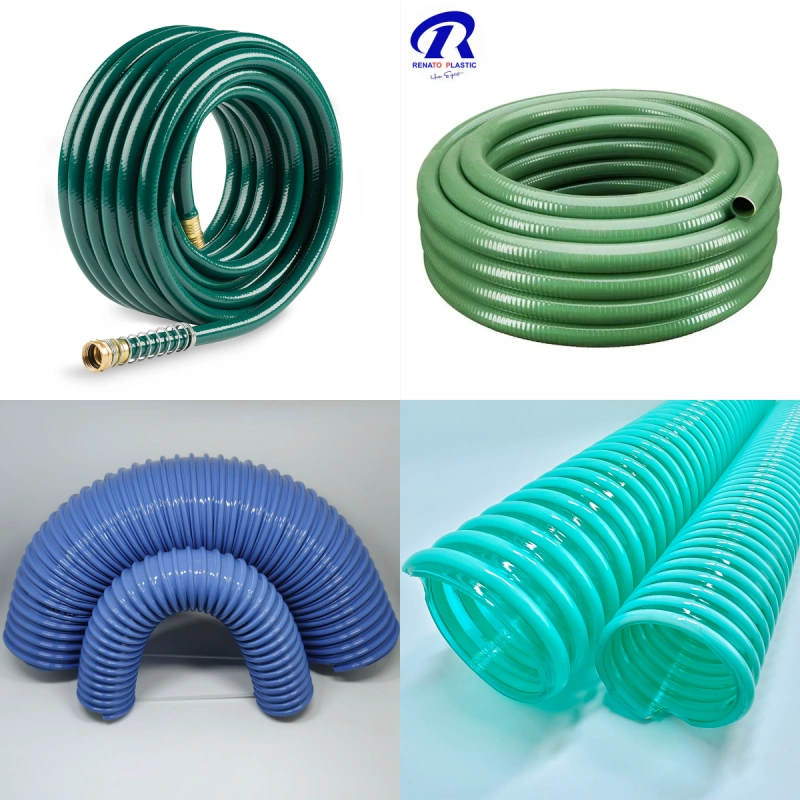
Garden hoses
Pond systems
DIY water lines
Flexibility and affordability matter most.
How to Choose the Right Flexible PVC Hose
Many failures happen at the buying stage. Use this logic instead:
What medium? Water, air, chemical, slurry
Pressure requirement? Working pressure + safety margin
Suction or discharge? Collapse resistance matters
Temperature exposure? Climate and fluid temperature
Movement level? Static or dynamic application
Choosing based on diameter alone is a mistake.
Flexible PVC Hose vs Rubber Hose
PVC hoses:
Lighter
Cheaper
Easier to store
Rubber hoses:
Better heat resistance
Better flexibility in cold
Longer lifespan in harsh environments
PVC wins in cost-sensitive, moderate-duty scenarios.
Quality Differences: What Buyers Often Miss
Two hoses that look identical can perform very differently.
Quality indicators include:
Uniform wall thickness
Smooth inner bore
Clear pressure rating markings
Consistent flexibility
Low-cost hoses often sacrifice material purity.
Maintenance and Storage Tips
Avoid prolonged UV exposure
Do not exceed pressure ratings
Drain after use
Store loosely coiled
Simple habits can double service life.
Environmental and Recycling Considerations
PVC is recyclable, but recycling infrastructure varies by region. Many manufacturers now offer:
Reduced plasticizer content
Eco-friendly stabilizers
Sustainability is improving, slowly.
The Real Reason Flexible PVC Hose Dominates the Market
Flexible PVC hose succeeds not because it’s perfect—but because it’s good enough in more situations than almost any alternative.
It balances:
Cost
Performance
Availability
Customization
That balance explains why it remains a global standard.
Final Summary
Flexible PVC hose is a versatile, cost-effective solution for fluid and air transfer across countless industries. Understanding its material properties, limitations, and variations allows buyers to choose smarter, avoid premature failures, and reduce long-term costs.
When selected correctly, flexible PVC hose is not just a consumable—it’s a reliable working tool that quietly does its job, day after day, without drama.
FAQ: Flexible PVC Hose – Buyer & User Questions
1. What is flexible PVC hose mainly used for?
Flexible PVC hose is commonly used for water transfer, air delivery, irrigation, suction and discharge, chemical handling (light-duty), and industrial fluid transport. Different designs suit different pressure and application needs.
2. Is flexible PVC hose suitable for suction applications?
Yes, but only reinforced types.
For suction or vacuum use, you should choose:
PVC steel wire reinforced hose
PVC spiral suction hose
Standard clear or fiber-reinforced hoses may collapse under vacuum.
3. What is the typical lifespan of a flexible PVC hose?
Under normal conditions:
Indoor or shaded use: 3–5 years
Outdoor use with UV exposure: 2–3 years
Proper storage and avoiding overpressure can significantly extend service life.
4. Can flexible PVC hose handle chemicals?
PVC hoses resist water, mild acids, alkalis, and alcohols, but are not suitable for strong solvents, aromatic hydrocarbons, or high-temperature oils unless specially formulated.
Always request a chemical compatibility chart before purchase.
5. What temperature range can flexible PVC hose handle?
Most standard flexible PVC hoses operate between:
-10°C to +60°C (14°F to 140°F)
Cold temperatures reduce flexibility, while excessive heat accelerates aging.
6. How do I choose the right PVC hose?
You should consider:
Medium type (water, air, chemical, slurry)
Working pressure and safety margin
Suction vs discharge
Temperature conditions
Required flexibility
Choosing only by diameter often leads to failure.
7. Is flexible PVC hose food-safe?
Only food-grade PVC hoses are suitable for food or drinking water. These must comply with standards such as:
FDA
EU food-contact regulations
Never assume standard PVC hose is food-safe.
8. Why do some PVC hoses turn hard or yellow over time?
This is usually caused by:
Plasticizer migration
UV exposure
Poor-quality stabilizers
Higher-quality hoses age more slowly and remain flexible longer.
9. Flexible PVC hose vs rubber hose: which is better?
PVC hoses are:
Lighter
Cheaper
Easier to store
Rubber hoses are:
Better for high temperature
More flexible in cold climates
Longer-lasting in harsh environments
PVC is ideal for cost-sensitive, moderate-duty applications.
10. Can flexible PVC hose be customized?
Yes. Manufacturers commonly offer customization for:
Diameter and length
Color and transparency
Pressure rating
Branding and packaging
Special formulations (UV-resistant, anti-static, food-grade)